An Amazing Revival
Dr. Eric McLaughlin was a missionary doctor in Burundi. After years of watching one out of seven of his patients die, it was hard for him to hold onto hope. He wrote, “I fear to hope sometimes. My recent weeks have been filled with tragedies. There have been several times when it seemed like someone was going to recover only to suddenly die. ‘Hope deferred makes the heart sick,’ says Proverbs 13:12. Exactly; my heart was sick.”
Later he told someone the story of Odette, a young woman who was hospitalized with severe kidney failure. Odette’s family pooled their money to send her to a kidney specialist in the city. Long-term dialysis was not an option, so Dr. McLaughlin wondered if such an expense trip would change anything for her. Amid his lament and doubt, his phone chimed in.
It was a message from his former student and coworker, who was now working at a hospital in the city. He wrote, “Good morning doctor. I want to let you know that we have been caring for Odette. We have not been able to do much. But some fluids and careful observation have resulted in her kidneys returning to almost normal! We are sending her home today. I just thought you would want to know; Praise God!”
Not only was Odette healed, but I received the good news from someone I had trained. The news arrived precisely when I was sitting there thinking about how afraid I was to hope. After reading that message, suddenly the idea that God was present was no longer theoretical; it was real. In a moment, a reflection on the whole story filled me with tearful joy. There was no longer even the slightest fear, my hope was renewed”.
After conversion and unsuccessful evangelism in Jerusalem, Saul has sailed to Tarsus, his homeland. The church throughout Judea, Galilee and Samaria is enjoying a time of peace and is increasing in numbers (Acts 9:31). Our attention is now turned from Saul to Peter. Peter and the other apostles had remained in Jerusalem when persecution caused the other disciples to flee (Acts 8:1).
Peter and John had briefly gone to Samaria to assist Philip. They returned to Jerusalem, preaching the gospel in many Samaritan villages (Acts 8:14-25). That is the last time John is mentioned in the book of Acts. The period of peace gave the Apostles an opportunity to visit the churches outside Jerusalem. Possibly that is the reason Saul found only Peter and James when he returned to Jerusalem (Gal. 1:18-19).
In Acts 9:32-35 we are told “now it came to pass, as Peter went through all parts of the country, that he also came down to the saints who dwelt in Lydda. There he found a certain man named Aeneas, who had been bedridden eight years and was paralyzed. And Peter said to him, “Aeneas, Jesus the Christ heals you. Arise and make your bed.” Then he arose immediately. So all who dwelt at Lydda and Sharon saw him and turned to the Lord”.
Where did these saints in Lydda hear the Gospel? There are two possibilities; either from the believers who had scattered because of persecutions (Acts 8:1) or Phillip the evangelist had won them to Christ. After leaving the Ethiopian eunuch Phillip “appeared at Azotus and traveled about, preaching the gospel in all the towns until he reached Caesarea” (Acts 8:40).
Lydda was a key town on that route between Azotus and Caesarea. This journey likely established the community of "saints" in Lydda that Peter has visited. Jesus gave the Church two main mandates (Matt. 28:19-20): making disciples (winning souls) and teaching believers to obey everything God has commanded (discipleship). Phillip had planted, Peter has come to water and God is giving increase (1 Cor. 3:6-8).
Peter found a man named Aeneas. We do not know whether Aeneas was saved or unsaved. The fact that Luke called him "a man," but referred to Tabitha as "a disciple" (v. 36) may imply that he was not a believer. Aeneas had a paralysis of the body which kept him in bed for eight years. Here was a sick, impotent man who was not able to fulfill his physical life as God intended it to be lived.
Peter, with absolute confidence said to him, “Aeneas, Jesus the Christ heals you. Then he arose immediately”. Aeneas healing was immediate, complete, perfect and permanent. Peter did not claim he had the power to heal Aeneas. The only person who has the power to heal is Jesus Christ. Peter was only an instrument, a willing "vessel for honor, sanctified, useful to the Master, prepared for every good work" (2 Tim. 2:21). And so Jesus got the credit and the glory.
Peter was continuing with the work that Jesus began to do until the day he was taken up to heaven (Acts 1:1-2). After Jesus went to heaven, the Church took over under his invisible supervision (Matt. 28:18-20). We read that when Jesus was on earth, he healed “every kind of disease, sickness and affliction” (Matt. 4:23; 9:35). He cast out the spirits with a word and healed all who were ill" (Matt 8:16); As many as touched the fringe of His cloak were cured (Matt. 14:34-36).
Through all of these miracles, Jesus demonstrated what sort of God we have; Our God is compassionate and caring. These miracles also show us that Jesus has authority over every disease and affliction. The creator of the human body can restore it back to perfect health no matter what the problem is. He has the power to do it. Note that Jesus did not go searching for sick people to heal, the sick came or were brought to him.
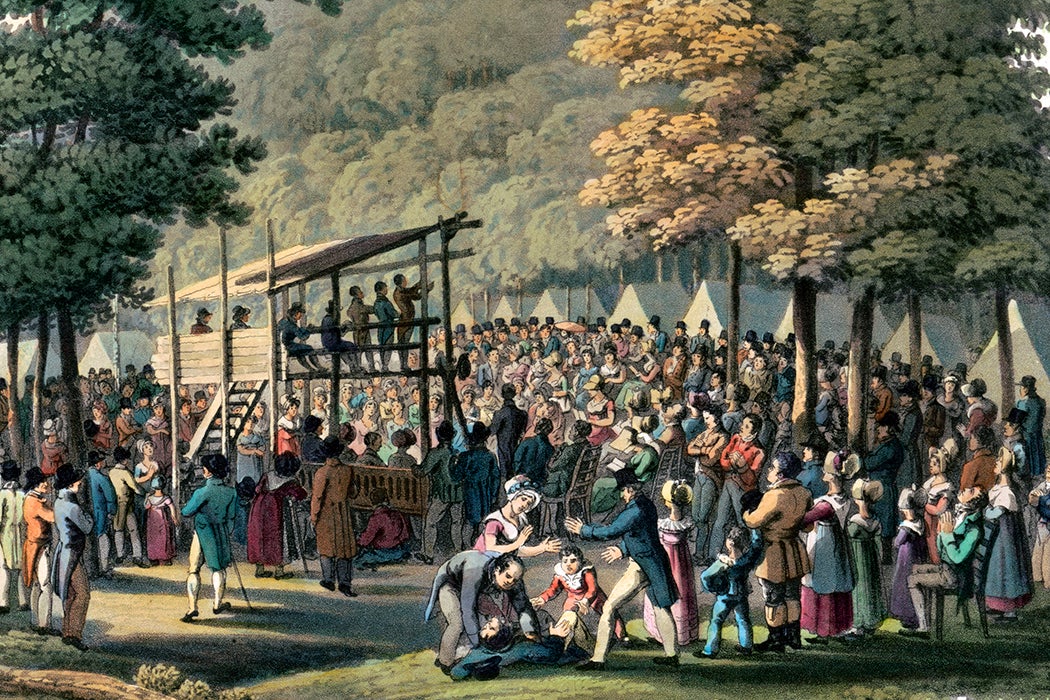
Peter said to Aeneas “arise and make your bed.” He gave instructions similar to what he had witnessed Jesus giving to the paralytics He had healed (Matt. 9:6; John 5:8). Aeneas arose immediately. All who dwelt at Lydda and Sharon saw him and turned to the Lord. The unbelievers saw this man and there was no doubt a miracle had taken place. The result was an amazing revival; “all” in two cities turned to the Lord.
The word “turn” here is associated with repentance; a change of heart and mind leading to a change of conduct. The people turned from the darkness to the light of the Lord (Isa.2:5); the light of life, (John 1:9). They turned from being darkness to become light in the Lord (Eph.5:8). Nothing has more impact for Jesus than a changed life. Unsaved men can argue about the rightness or wrongness of Christianity, but they cannot deny the witness of a changed life.
Only one man was supernaturally changed and all people turned to the Lord. There was joy in the cities because a man had been healed. Luke 15:7 tells us that there is much joy in heaven over one sinner who repents. What great joy was in heaven when they all turned to the Lord. It is not God’s will for everyone that is physically sick to be made well. But, it is His will that everyone who is spiritually sick should be made whole. God is far more concerned about our eternal destiny than our present comfort.
The healing of Aeneas manifested the power of God over diseases. God’s power over disease is also manifested when He enables us to live year after year in the enjoyment of health (Ps.91: 3-4, 10; Deut.7:12-15; Exod. 15:26; 23:25). We face germs of various diseases daily. You may live year after year oblivious of some health struggle within your body because God enables the body to win the battle.
Good health is a great blessing; we should rejoice more because of continued health than because of recovery from a disease. Some people are grateful to be cured of a disease but they forget to thank God when they are kept healthy. God is our shield and protector, not just in spiritual matters but also in physical health. When we face illness we can turn to him for help. His love is unchanging and his power to protect and to heal is as strong today as it was in biblical times.
One day a paralytic was brought to Jesus. He said to the paralytic, “Son, be of good cheer; your sins are forgiven you.” The scribes thought it was blasphemy. Jesus, knowing their thoughts, said, “which is easier, to say, ‘Your sins are forgiven you,’ or to say, ‘Arise and walk’? But that you may know that the Son of Man has power on earth to forgive sins”; He said to the paralytic, “Arise, take up your bed, and go to your house.” And he arose and departed to his house (Matt 9:1-8).
Jesus demonstrated that he had power to heal the body and to heal the soul. What a blessed thing it is to know that Jesus can take a sinner who is paralyzed with sin and make him a new man! He can remove the paralysis from the soul that is bound by sin as easily as He can remove the paralysis from the muscles. No sin is impossible for Jesus to cleanse and he is able to save completely (Heb. 7:25).
When Aeneas got healed “all who lived at Lydda and Sharon saw him and turned to the Lord” (9:35). In God's providence, Peter an apostle and Aeneas a lame man were brought together for a purpose with great eternal value. The healing of the sick man was not an end in itself, but a means to another end— the salvation of many. The primary purpose of the healing was to open a door for the gospel, to lead to the salvation of souls, and to spread abroad the name of the Lord Jesus.
Throughout the Bible, we encounter numerous stories of God healing the sick and protecting His people from harm. These stories remind us that God cares deeply about the health and well-being of his people. He desires that they live life to the fullest. God’s promise of health is not solely about physical health but encompasses overall well-being, including mental and spiritual health. God gives holistic care to those who dwell underneath his wings.
Biblical narratives frequently illustrate God intervening to heal or prevent sickness among His followers, demonstrating His power and compassion. The Bible is rich with scriptures that highlight God’s healing power and His promise of protection for His people. These verses reminding believers of God’s ability to heal and protect .They illustrate that God’s power transcends human understanding and limitations; Thus serving as a source of hope and encouragement.
The evidence is overwhelming that Jesus does heal supernaturally today. There are many records of sudden, complete and permanent healings which cannot be explained medically. God does heal today through prayers of Christians, individually or collectively (James 5:14-15). However any healing of the body is, at best, temporary. Everyone who was ever healed in New Testament days died later on.
God does not always heal. Some diseases remain chronic. Paul had a painful thorn; “three times I pleaded with the Lord to take it away from me. But he said to me, my grace is sufficient for you, for my power is made perfect in weakness” (2 Cor. 12:8-9). Sometimes the righteous unexpectedly die. Isaiah 57:1 says “The righteous perish…the devout are taken away… to be spared from evil”. However, in every case a child of God “shall come to the grave at a full age, as a sheaf of grain ripens in its season” (Job 5:26 NKJV).


Comments
Post a Comment