A sweet Smelling Sacrifice
A man was called by the chairman of the community charity. "Sir," said the chairman, "our records show that despite your wealth, you've never once given to our drive." "Do your records show that I have an elderly mother who was left penniless when my father died?” fumed the man. "Do your records show that I have a disabled brother who is unable to work?
Do your records show I have a widowed sister with small children who can barely make ends meet?" "No, sir," replied the embarrassed chairman. "Our records do not show those things." "Well, I don't give to any of them, so why should I give anything to you?" (Readers Digest, 1996).
The tenth chapter of Acts is one of the most important chapters in the Bible. It is so important because it tells how a gospel that was originally thought of in exclusively Jewish terms came to be a gospel for the whole world. This chapter describes God's flinging open the door of His Church to Gentile believers and thus marking a key transition point in the spread of the Gospel in the Book of Acts.
In the preceding chapter we see God moving Peter up the Mediterranean coast, each time bringing him closer to Gentile territory. He moved from Jerusalem to Lydda (Acts 9:32-35). Then he moved from Lydda to Joppa (Acts 9:36-43). In chapter 10 he eventually gets to Caesarea, the very heart of Gentile territory. God's Spirit was moving Peter step by step in fulfilment of Acts 1:8.
Acts 10:1-2 says “There was a certain man in Caesarea called Cornelius, a centurion of what was called the Italian Regiment, a devout man and one who feared God with all his household, who gave alms generously to the people and prayed to God always”. Caesarea was located on the coast of the Mediterranean about thirty miles north of Joppa. Cornelius was a gentile stationed at Caesarea.
A centurion was a professional military officer commanding one hundred men. Soldiers were appointed as centurions by virtue of their bravery, loyalty, character and prowess in battle. Centurions were held to high standards of conduct. Roman centurions were well paid and held in high esteem. The combination of wealth, power, and prestige made them influential in society.
Cornelius was a devout man; Luke gives us a descriptive definition of "devout" as one who feared God, who gave alms generously to the people and prayed to God always (Acts 10: 2). In the Sermon on the Mount, Jesus addressed three cardinal teachings of the Jews -almsgiving, prayer and fasting, (Matt. 6:1-18). Cornelius, a Gentile, was practicing these disciplines from a sincere heart.
Cornelius devout life spilled over like a refreshing spring of living waters onto those around him. He gave alms generously to the people. It’s interesting to observe that in Joppa the Holy Spirit led Peter to Dorcas, a woman who was “full of good works and charitable deeds” (Acts 9:36). In Caesarea, Peter is led to Cornelius a man who gave alms generously to the people. Charity (alms) and the Gospel are intrinsically linked.
Compassion is part of God’s character and kindness is one of the best ways to show the world what he is like. Charity is viewed as the tangible expression of the pure love of Christ. Charitable giving is a beautiful way to live out the gospel. By giving to those in need, we are living out the gospel in real, practical ways. When we give, we are not simply offering material resources; we are embodying the love of Christ. It’s the practical manifestation of the Gospel message.
Charity reflects the heart of God, honors Christ’s example, and allows us to participate in the mission of spreading His love. Whether through supporting missions, helping those in need, or giving to our local church, our generosity is a reflection of the gospel at work in our lives. As we follow Christ, may we be people marked by generosity; people who give freely, not out of obligation, but out of a deep love for God and a desire to spread His kingdom on earth.
Cornelius feared God with all his household. The character of Cornelius was such a holy aroma to his family! He led them by example, his talk matched his walk. His trust in Yahweh along with this integrity led his family to follow, so they too became "fearers" of the living God. His children would have had pagan gods but they chose their father’s God. There is a saying "go into the world and preach the Gospel; if necessary use words."
God chose Abraham specifically because He knew Abraham would command and teach his children and household to keep the way of the Lord by doing righteousness and justice. God said “I have chosen him, so that he will direct his children and his household after him to keep the way of the Lord by doing what is right and just” (Gen.18:19). People did not take Noah’s warning about the coming flood seriously but his whole family believed and followed him into the ark (Gen. 7:7,13).
To the best of his knowledge and ability Cornelius followed the Old Testament Scriptures. Nevertheless, he had not entered into New Testament salvation. Cornelius was a Roman soldier who feared God even before he came to know Christ. Most Romans of that time believed in many gods but not Cornelius feared the one true God. Even though the Jewish people didn’t accept him as one of their own, God recognized him as one of His.
Acts 10:3-4 says “about the ninth hour of the day, he saw clearly in a vision an angel of God coming in and saying to him, “Cornelius!” And when he observed him, he was afraid, and said, “What is it, lord?” So he said to him, “Your prayers and your alms have come up for a memorial before God. A memorial is something that causes or preserves the remembrance of a person or thing.
In the tabernacle incense was burnt on the altar every day, both in the morning and in the evening (Exod. 30: 7-8; 2 Chron. 13:11). God instructed Moses to make an incense blended as by the perfumer, seasoned with salt, pure and holy” (Exod.30:34-35).The rising smoke signified the Israelites’ worship ascending to God. The fragrant aroma depicted his acceptance and pleasure with their devotion.
In a vision Apostle John saw four living creatures in heaven “holding golden bowls full of incense, which are the prayers of God’s people” (Rev. 5:8). An “angel, who had a golden censer, came and stood at the altar. He was given much incense to offer, with the prayers of all God’s people, on the golden altar in front of the throne. The smoke of the incense, together with the prayers of God’s people, went up before God from the angel’s hand (Rev.8:3-4).
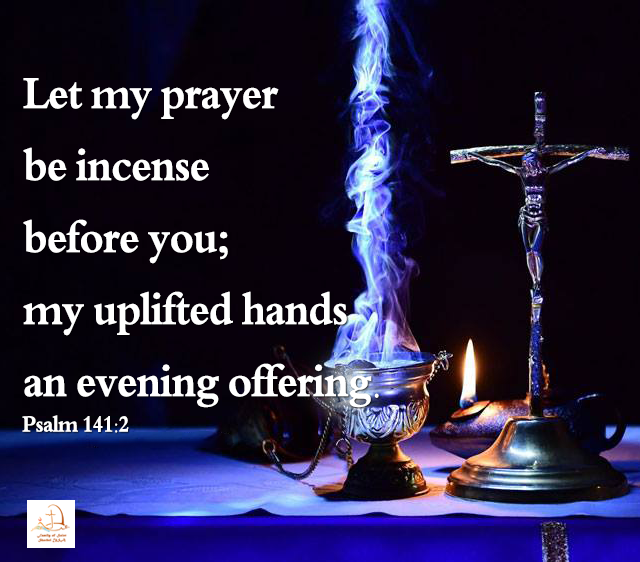
In Heaven there are golden bowls full of incense, which are the prayers of the saints. This is likely where the prayers of Cornelius were deposited and God kept remembering them. God remembers our prayers; they are before Him in Heaven waiting to be answered at the right time. In Psalm 141:2, David wrote “may my prayer be set before you like incense; may the lifting up of my hands be like the evening sacrifice”.
This imagery of prayers set before God like incense suggests that prayers are not only heard but deeply enjoyed by God. Have you ever thought of your prayers as a "memorial before God?" That should motivate you to devote yourselves to prayer (Col. 4:2); pray in every situation (Phil. 4:6); pray without ceasing (1 Thess. 5:17); pray on all occasions with all kinds of prayers and requests (Eph. 4:18). Keep the incense going up before God, continuously.
What a beautiful picture of what God desires from us his holy and royal priesthood (1 Pet.2:9). We should lift up prayers continually before God. Prayers of praise, prayers of confession, prayers of petition, prayers of intercession, prayers for guidance, prayers for help, all kinds of prayers rising like incense before God. From our hearts there should be this incense always going up before God throughout the day.
Almsgiving is the act of donating money or goods to the poor or performing other acts of charity. In Almsgiving we focus on the needs of those who are less fortunate. Generally, it involves some type of sacrifice on behalf of the giver in order to provide for the needs of the other. More than simply giving money, almsgiving is an act of love. Alms are memorials deeds before God.
They are like voices speaking on our behalf, keeping our names fresh in the heaven. Gifts to the needy and the suffering are well pleasing sacrifices to God. Thus the gifts of the Philippian brethren, who ministered to the needs of the apostle Paul while a prisoner at Rome, were said to be “a sweet-smelling aroma, an acceptable sacrifice, well pleasing to God” (Phil. 4:18). Heb 13:16 says “And do not forget to do good and to share with others, for with such sacrifices God is pleased”.
Nehemiah requested God to remember his faithful efforts. He prayed “remember me for this, my God, and do not blot out what I have so faithfully done for the house of my God and its services....Remember me with favor, my God (Neh.13:14,31). In Malachi 3:14-18 we read “You have said, ‘It is futile to serve God. What do we gain by carrying out his requirements ... Then those who feared the Lord talked with each other, and the Lord listened and heard.
A scroll of remembrance was written in his presence concerning those who feared the Lord and honored his name. “On the day when I act,” says the Lord Almighty, “they will be my treasured possession. I will spare them, just as a father has compassion and spares his son who serves him. And you will again see the distinction between the righteous and the wicked, between those who serve God and those who do not.
The angel painted Cornelius's actions as offerings to God. That is a beautiful picture of what our properly motivated acts of faith are like, they ascend to God like the smoke of the sacrifice. Levitical sacrifice was a memorial on the altar, a sweet aroma to the Lord. our prayers and good deeds done in Christ's name are a sweet-smelling aroma wafting up to God.
Psalm 112:5-6 says “good will come to those who are generous and lend freely, who conduct their affairs with justice. Surely the righteous will never be shaken; they will be remembered forever. If you spend yourselves in behalf of the hungry and satisfy the needs of the oppressed, then your light will rise in the darkness and your night will become like the noonday (Isa. 58:10).
God keeps a record of your every obedient act. You might be thinking that nobody ever notices you for who you are or for what you do. God keeps track of every little detail. Proverbs 15:3 says "the eyes of the LORD are in every place, watching the evil and the good." He is keeping all the records. You have his promise that even giving someone a cup of cold water, insignificant as the action may seem, will certainly be rewarded (Matt.10:42).
On the Judgement day, the criteria for separating sheep and goat will be,” I was hungry and you gave me something to eat, I was thirsty and you gave me something to drink, I was a stranger and you invited me in, I needed clothes and you clothed me, I was sick and you looked after me, I was in prison and you came to visit me...Truly I tell you, whatever you did for one of the least of these brothers and sisters of mine, you did for me”(Matt. 25: 31-46).


Comments
Post a Comment