A Life Worth Living
In the construction of a door, one man makes the panels, another makes the frame, another fits it together and a fourth hangs it by its hinges. The panel maker has a very imperfect portion of the work to show as the result of his toil, but he has done his part and fulfilled his mission whether the door ever swings in its place or not. The man who carries the hod of mortar up the ladder does not lay a single brick, but in his measure his service is essential and as worthy as the architect that planned the building, or the mason that rears its walls.
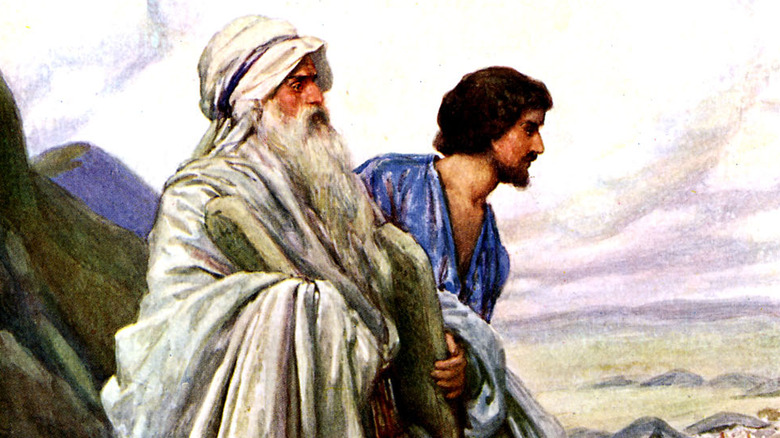
After the death of Moses the servant of the Lord, the Lord said to Joshua son of Nun, Moses’ aide: “Moses my servant is dead. Now then, you and all these people, get ready to cross the Jordan River into the land I am about to give to them (Joshua 1:1-3). Moses is repeatedly called the “servant of the Lord” (Exod. 14:31; Num. 1:7-8; 12:7-8 ; Exod. 14:31; Mal. 4:4). This beautiful description of Moses is mentioned four times in Joshua chapter 1 (vv.1,2,13,15). The title “servant of the Lord” is the greatest compliment God could have bestowed on Moses.
A "servant of the Lord" is a biblical term for an individual chosen by God to fulfill His will. A servant is someone who carries out the will of another. A servant is characterized by obedience (even at personal cost), humility, faithfulness in trials and a life dedicated to God’s purpose rather than personal ambition. Hebrews 3:5 notes that “Moses was a faithful servant who testified to the things that would be spoken later”.
Significantly, Moses told the people that “the LORD your God will raise up for you a prophet like me from among you, from your fellow Israelites. You must listen to him” (Deut. 18:15). This messianic prophecy was fulfilled in Jesus (Acts 3:22). Jesus, like Moses, was “the servant of the Lord” but in an even greater way. Hebrews 3:3 says Jesus has been found worthy of greater honor than Moses, just as the builder of a house has greater honor than the house itself.
Jesus came as a servant of God! Mark10:45 say “for even the Son of Man did not come to be served, but to serve, and to give his life as a ransom for many.” After we are saved we become servants of God! We are “turned to God from idols to serve the living and true God” (1 Thess.1:9). Wherever we are and whatever we do, we serving the living God and His people, in whatever capacity the Lord has endowed us with!
Moses is described as " very humble, more humble than anyone else on the face of the earth" (Num.12:3). His service was marked by a lack of personal ambition and a focus on serving God’s purpose. In Exodus 32:32, Moses pleaded with God to forgive the Israelites for worshipping the golden calf, stating, "But if not, please erase me from the book you have written". Moses was willing to sacrifice his own standing with God to save his people.
In Numbers 11: 27-29 “A young man ran and told Moses, “Eldad and Medad are prophesying in the camp.” Joshua son of Nun, who had been Moses’ aide since youth, spoke up and said, “Moses, my lord, stop them!” But Moses replied, “Are you jealous for my sake? I wish that all the Lord’s people were prophets and that the Lord would put his Spirit on them!” Joshua expressed concern about others prophesying fearing it might undermine Moses' authority.
Moses' reply reflected his humility and understanding of God's broader plan. His wish reflected a heart that desired spiritual empowerment for all believers. Moses welcomed Spirit-empowered ministry in others. He longed for universal endowment of the Spirit, foreshadowing Joel 2:28-29 and its fulfilment at Pentecost (Acts 2:16-18). Moses wish anticipated the New-Covenant reality in which every believer is gifted for ministry (1 Cor.12:4-11).
Moses loved the Lord and wanted his relationship with God to deepen through the years. He prayed " teach me your ways so I may know you and continue to find favour with you” (Exodus33:13). That prayer was answered; in Psalm 103:7 we are told “he made known his ways to Moses, his deeds to the people of Israel”. His "ways" imply His character and intentions, while His "deeds" are the actions He performs. Moses had a deeper knowledge of God than his contemporaries because he desired it, prayed for it and spent much time with him.
Moses was concerned both for his credibility as leader of the Israelites and the credibility of the Israelites as God's people. When the Lord said he will not go with them but will send an angel to go with them instead. Moses got concerned and said to God “If your Presence does not go with us, do not send us up from here. How will anyone know that you are pleased with me and with your people unless you go with us? What else will distinguish me and your people from all the other people on the face of the earth?” (Exod.33:2-3,15-16).
When God wanted to destroy the Israelites, Moses lay prostrate before him forty days and forty nights praying “Sovereign Lord, do not destroy your people, your own inheritance...Overlook the stubbornness of this people, their wickedness and their sin.Otherwise, the country from which you brought us will say, ‘Because the Lord was not able to take them into the land he had promised them, and because he hated them, he brought them out to put them to death in the wilderness” (Deut.9:25-28).
God considered Moses and Samuel as the greatest intercessors in their time. Moses repeatedly stood “in the breach” to turn away wrath (Exod. 32:11-14; Num. 14:13-20; Deut. 9:18-20; Ps.106:23). Samuel’s prayers and sacrifices brought national deliverance (1 Sam.l 7:5-9; 12:19-25).One time God said “even if Moses and Samuel were to stand before me, my heart would not go out to this people” (Jer.15:1). By invoking both names, the LORD was saying, “bring your best prayer warriors, my answer will still be No.”
Moses’ unique relationship with God is emphasized in Numbers 12:1-8 . One time Miriam and Aaron began to talk against Moses, “has the Lord spoken only through Moses?” they asked. “Hasn’t he also spoken through us?” And the Lord heard this. Now Moses was a very humble man, more humble than anyone else on the face of the earth. At once God summoned Aaron and Miriam and said to them “my servant Moses; he is faithful in all my house. With him I speak face to face... Why then were you not afraid to speak against my servant Moses?”
As the end of Moses’ life drew closer, the Lord said to him, “take Joshua son of Nun, a man in whom is the spirit of leadership and lay your hand on him... Give him some of your authority so the whole Israelite community will obey him... Moses did as the Lord commanded him” (Num. 27:18-22). “And Moses the servant of the Lord died there in Moab, as the Lord had said. He buried him in Moab…
Now Joshua son of Nun was filled with the spirit of wisdom because Moses had laid his hands on him. So the Israelites listened to him ... Since then, no prophet has risen in Israel like Moses, whom the Lord knew face to face, who did all those signs and wonders the Lord sent him to do in Egypt… no one has ever shown the mighty power or performed the awesome deeds that Moses did in the sight of all Israel” (Deut. 34: 5-12).
In spite Moses imperfections, God affirmed Moses unwavering loyalty in all his assignments. He said “my servant Moses is faithful in all my house”. The phrase "Moses the servant of the Lord" is used even after his death (Deuteronomy 34:5, Joshua 1:2), anchoring his legacy in his devotion to God rather than just his role as a leader. Moses served God in his own generation and when his work was done God took him home.
Moses wanted to go over Jordan. Most likely it seemed to him that he died before his time. And yet his work, as we can see it now, was completed. Moses’ work ended at Jordan, Joshua’s began at Jordan. His commission was to bring the Hebrews to the Jordan; Joshua’s commission was to bring them over the Jordan and establish them in Canaan. The next generation was provided for before Moses went up into Nebo.
Our business is to do our duty. That duty may only seem to be a fragment of what we desire to accomplish, but it is all we are answerable for, and to do our portion well is to stand clear with God. When a man is interested in nothing but to do the work that God assigns him, he will never die till the work is done. Among the servants of God there are no fallen buds. They all “come to the grave in full vigor, like sheaves gathered in season” (Job 5:26).
As the events in the book of Joshua begun, the Israelites were waiting at the border of the Promised Land. Joshua was commissioned to lead this new generation into the Promised Land. Life goes on even when one of God's great servants passes on. God’s workers die, but God’s work goes on. Moses is dead, but God is alive and eternal. In Psalm 90:2 Moses said to God “Before the mountains were born or you brought forth the whole world, from everlasting to everlasting you are God”.
When Moses died, Joshua was ready to take over because God had been preparing him for years. Joshua trained under Moses for about 40 years as his assistant in the wilderness. This mentorship was intentional, preparing Joshua to succeed Moses as the leader of Israel. The Israelites respected Moses as a leader and it was going to take someone strong and trusted to succeed Moses as their leader. Joshua was chosen to be the next leader because he had been gaining respect from the Israelites. They were familiar with him.
Are you in training right now? Is there someone that you respect that you’re walking alongside in this stage of your life? Are you discipling someone else? Every man’s work is a continuation. Every man is some one’s successor and in time must be succeeded by someone. It is what this life is all about. We are supposed to be learning from our elders and training the younger generations to thirst after the Lord; to understand His word and ways and to desire an intimate relationship with Him.
Every man’s work differs from that of him who went before, and of him who will come after. Moses had been trained in Pharaoh’s court and among Jethro’s flock. He is best remembered as a great intercessor but not a military leader. Joshua trained in the brickyards of Egypt and in the army of Israel. He was not a great intercessor but is remembered as a strategic military commander. Each had been peculiarly fitted for the work he was to do. The divine commission is given to men who are peculiarly fitted for the work.
Every man should ask himself, “Whom am I succeeding? Whose footprints are near the place where I stand? Do they belong to a great teacher, a wise leader, a prayer warrior or a godly mother? Then my responsibility begins with their greatness; where they have been great, I must try to be greater still. No life is worth living unless it sets before itself a work worthy to be done. What a legacy and remarkable footprints we can leave when we faithfully fulfill what the Lord has assigned to us.


Comments
Post a Comment